








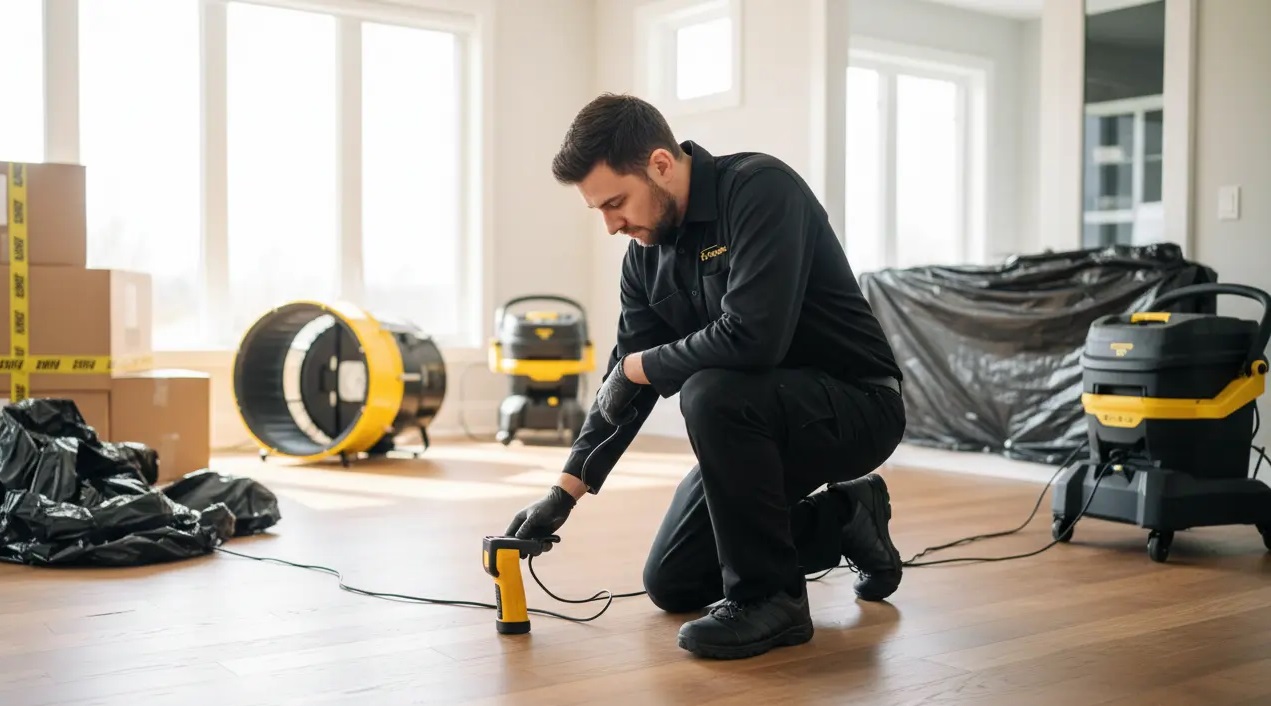
The right rental decision is less about brand names and more about sequencing: extraction first when water is held in soft materials, airflow next, and dehumidification when the air itself is staying damp. For Vaughan property owners, the sharper question is stored contents blocking the wall base: that detail helps separate water removal, airflow, humidity control, filtration and follow-up checking before any rental is booked. The detail most likely to be missed involves condensation on cool glass or exposed metal, so it should stay visible in the plan.
Start with the local moisture problem
City of Vaughan flooding guidance is worth noting because flood and drainage guidance is really a planning prompt: find the water path, then decide what the room still needs. That short-response window makes it helpful to know which rental equipment is for extraction, which is for air movement, and which is for humidity control. A small commercial suite that needs drying without turning the space into a construction zone can look manageable once the surface water is gone, especially in a rental-suite bedroom corner, but the slower problem may be the corner outside the direct airflow path. The room should be judged by the affected materials, not just by whether the open floor looks better.
A Vaughan cleanup becomes more manageable when the reader names the bottleneck before choosing equipment. Those are different jobs. A fan can move air, but it does not remove water held in carpet; a dehumidifier can lower airborne moisture, but it cannot fix blocked airflow. A good rental plan starts with keeping cords away from wet walking paths. The next check should come back to low spots where water collected first, not only the open floor.
That early sorting also helps readers who are not restoration technicians. Notes about where water entered, which materials were affected, and whether the room can be isolated will make any supplier conversation more specific. In this case, the detail to keep in view is condensation on cool glass or exposed metal, especially while leaving access to panels, drains and shutoffs, because it can decide whether a simple rental is enough or whether the plan needs another step. That detail is small, but it can decide whether the first setup is enough.
Match the rental to what is still wet
Moisture checks are not the same as drying. An infrared camera can help direct attention, but hidden water still requires judgment: readings, visual checks and material history should be considered together before anyone assumes a cavity is dry. A clear rental plan begins with the bottleneck: extraction, airflow, dehumidification, filtration or checking. In plain terms, an infrared camera belongs in the plan only if it solves the current bottleneck. If water is still pooled or held in carpet, extraction comes before drying; if the room is closed and humid, dehumidification matters; if dust is part of the work, filtration may deserve its own decision. That makes the first inspection after setup more useful.
The mistake is treating every damp room as a fan problem. Air movement works when wet surfaces are exposed and the air has somewhere to carry moisture. In this version of the job, the placement issue is low spots where water collected first, so avoiding a fan-only setup when carpet still holds water matters more than simply adding another machine. A useful next move is leaving access to panels, drains and shutoffs, then checking how the room responds.
It is also worth separating comfort from drying. A room can feel breezy and still have wet materials, and a warmer room can still carry too much humidity. More useful signs include whether the concern around overnight isolation of the affected room has been addressed, whether odours fade after run time, and whether opening the airflow path instead of crowding one corner is changing the affected surfaces rather than only the open middle of the room. In practical terms, opening the airflow path instead of crowding one corner gives the renter a clearer way to evaluate the first run time.
Build the rental mix around the room
A local guide should not pretend every property in Vaughan has the same risk. A commercial vestibule that has to reopen quickly behaves differently from a rental-suite bedroom corner. The room type affects whether equipment should prioritize extraction, surface airflow, lower humidity, air filtration or follow-up moisture checks. This is where keeping cords away from wet walking paths connects the equipment choice to the room.
For carpet, start by asking whether soft materials are still holding water. For concrete or tile, look at low spots, wall bases and stored contents. For drywall and trim, be cautious about assuming the surface tells the whole story. For this room type, the practical reminder is opening the airflow path instead of crowding one corner so the rental order does not solve one problem while ignoring another. A practical rental plan treats the amount of wet material rather than room size as a setup detail rather than a cleanup footnote.
Where a drying-specific rental page fits
Readers who want a drying-focused comparison point can use infrared camera rental details for Vaughan. The page is most useful when it is treated as one option beside the room notes, especially if avoiding a fan-only setup when carpet still holds water is already part of the plan. That matters here because the wall base behind shelving may change the next rental step.
In a Vaughan property, the same rental name can mean different things depending on floor type, contents and run time. That is why the wall base behind shelving should be checked before a booking decision. The plan should stay tied to the condition around furniture legs or boxes sitting on damp flooring instead of reducing the job to room size.
A neutral comparison should also leave room for escalation. Contaminated water, electrical exposure, swollen materials or suspected moisture inside assemblies can make rental equipment only one part of the answer. A sensible rental plan is the one that leaves fewer guesses at the end of the day. The safer assumption is to revisit odour returning when equipment is paused before the room is reset.
Questions to ask before booking
Can a room look dry while still needing attention?
Yes. Open surfaces can improve before edges, contents or wall bases are ready. A second check should include overnight isolation of the affected room instead of judging the room by the first dry-looking patch. A rental plan that accounts for dry-side power access near the equipment path is easier to adjust after the first run time.
What should be documented before the room is reset?
Document the water source, wet materials, equipment run time and any area that still feels damp, especially after planning pickup or delivery around equipment size. Those notes are useful if the problem returns. Separating clean-water drying from unknown-water cleanup gives the first few hours of run time a clearer purpose.
In Vaughan, the rental choice should leave a simple record of what changed. Note the equipment used, the wet material it was meant to address, and whether stored contents blocking the wall base still needs attention after keeping cords away from wet walking paths. A measured approach reduces the chance of returning furniture before the room is ready. The practical check is to look at stored contents blocking the wall base before using filtration as a separate decision from drying.